Why Was My Colorado Energy Rebate Denied
A rebate denial can be frustrating and costly without clear reasons. Riley Riley Construction investigates denial causes and outlines remedies to appeal or correct submissions. Call 17209279730 to start a denial review and recovery plan. This can restore expected funding and prevent repeat issues.
Receiving a denial for an energy rebate can feel like an unexpected financial setback, especially when you counted on that funding to offset project costs. Riley Riley Construction specializes in unraveling the often-confusing reasons behind rebate denials and building a pragmatic plan to recover funds. We begin by treating each denial as a data problem: what the program required, what was submitted, and where the breakdown occurred.
When you call 17209279730 to start a denial review, we'll quickly gather the documents and timelines needed to either correct the submission or file a formal appeal. Our goal is to restore the rebate you expected and to implement safeguards that reduce the chance of a repeat denial. Whether your issue involves eligibility, documentation, or utility processing, a methodical approach will maximize your chances of recovery.
Common reasons a Colorado energy rebate is denied
Knowing the most frequent causes of rebate denials makes it easier to diagnose your own case. In Colorado, programs administered by utilities, state agencies, or third-party administrators often have specific technical requirements and documentation checklists. Denials typically fall into a few broad categories such as eligibility, incomplete paperwork, incorrect installation details, or timing issues tied to program deadlines.
Understanding these categories helps you prioritize corrective action. For instance, an eligibility mismatch can sometimes be resolved by reclassifying the measure or providing additional proof of income or property ownership; incomplete paperwork usually requires resubmission of missing invoices, permits, or test reports. Below are common denial triggers to watch for:
- Ineligible measure or model number (equipment not on the qualified products list).
- Missing or incomplete supporting documents: invoices, contractor signatures, permits.
- Installation performed outside program dates or after rebate funds expired.
- Noncompliant contractor certification, licensing, or audit records.
- Incorrect account, meter, or customer identification on forms.
- Failure to provide proof of payment or proof of residence/ownership.
- System sizing, interconnection or performance issues detected during verification.
How to diagnose your denial: a clear step-by-step review
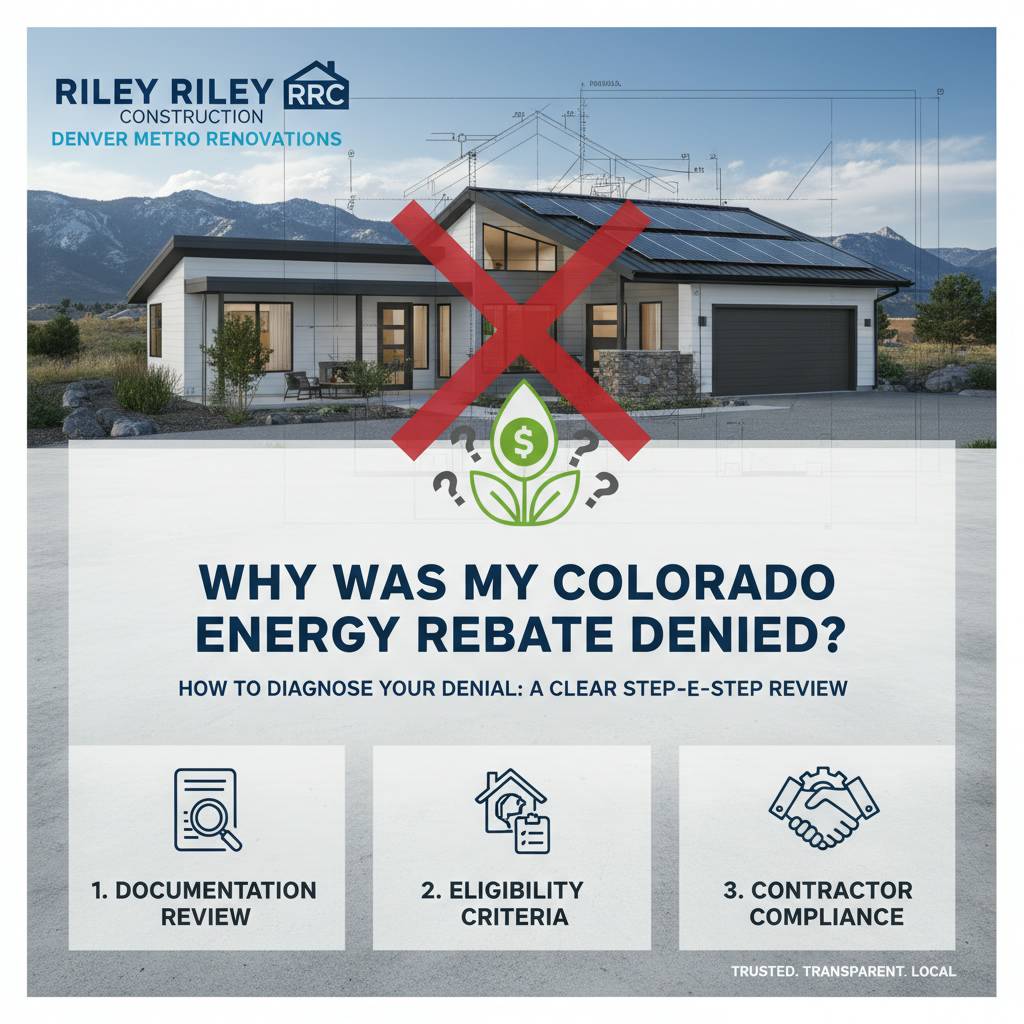 A structured diagnostic process reduces guesswork and helps you present a strong appeal if needed. Start by requesting the formal denial letter and any audit notes from the program administrator or utility. These documents often include exact reasons and missing items. Next, create a timeline: installation date, invoice dates, permit date, rebate submission date, and any correspondence from the administrator. Timelines reveal whether a missed deadline or a late upload caused the denial.
Gather the primary evidence next. Key documents include the original rebate application, contractor invoice, equipment specification sheets, installation photos, permits, proof of payment, and any pre-approval or reservation confirmations. Once you have the file assembled, compare each piece to the program's eligibility checklist. This method often exposes one or two specific mismatches you can correct rather than an amorphous incomplete rejection.
- Request the denial and audit documentation from the administrator.
- Assemble all project records, invoices, permits, and product data.
- Map each record to the program's checklist to identify specific gaps.
- Decide on correction, resubmission, or formal appeal based on findings.
Evidence and documentation that strengthen an appeal
A successful appeal is evidence-driven. Programs typically allow resubmission of missing items and, in many cases, will reconsider a denial when provided with clear, verifiable proof. Start with the basics: a legible, itemized invoice showing model numbers and serial numbers, contractor contact information, and dates of installation and payment. Attach product specification sheets that confirm efficiency ratings and program eligibility. If the issue is proof of payment, provide bank statements or receipts that clearly match the invoice amount and date.
When performance or site verification was the reason for denial, measurement and verification documentation becomes essential. Include meter readings, utility bills that show expected energy reductions, and signed commissioning reports. Photographic evidence is particularly persuasive: before-and-after photos of installed equipment, meter installations, and contractor work areas. If you need to demonstrate ownership or occupancy, add mortgage statements, a deed, or a utility bill linked to the property address.
| Missing Item | Recommended Evidence |
|---|---|
| Equipment eligibility | Manufacturer specification sheet and model/serial numbers |
| Proof of payment | Bank statement, cleared check image, or merchant receipt |
| Installation date verification | Signed invoice, permit stamp, or installation photos with timestamps |
| Contractor qualification | Licenses, certifications, and contractor insurance documentation |
Appeal strategies and timelines
Programs vary in appeal procedures and deadlines, so act quickly once you receive a denial. Many Colorado energy rebate programs provide a 30- to 90-day window for appeals or resubmissions, but the exact period depends on the administrator. Begin by asking for a written explanation of the appeals process and the expected timeline. If the denial is due to missing documentation, a resubmission often resolves the case faster than a full appeal hearing.
When more formal appeals are required, structure your submission like a case brief: start with a concise summary of the facts, list the disputed items, and present the supporting evidence in a clear, numbered format. Where relevant, reference the program rules verbatim and explain how your documentation satisfies those rules. Keep communications professional and factual - emotional language rarely helps and can slow resolution.
Escalation is sometimes necessary. If you have exhausted the program's internal appeals and believe the denial is unjust, you can contact state consumer protection entities or the public utilities commission for guidance. Before escalation, confirm that you have followed the program's dispute steps and have complete documentation: regulators will want to see that you sought remedy through the program first.
FAQ: why was my Colorado energy rebate denied?
The question "why was my Colorado energy rebate denied" often has a simple administrative answer: something in your submission did not meet the program's documented requirements. Common culprits include missing contractor signatures, model numbers that don't match qualified equipment lists, or submission outside the allowed date range. The denial letter should identify the precise reason; if it does not, request clarification in writing so you can target your response effectively.
Preventing future denials: best practices for applicants and contractors
 Prevention is the most cost-effective strategy. Start any project by reviewing the relevant rebate program rules and qualified product lists before purchase or installation. Many programs offer pre-approvals or reservations; obtaining a pre-approval provides a clearer path to reimbursement and reduces the chance of disqualification later. Ensure your installer is familiar with program requirements and obtains any necessary permits or certifications before beginning work.
Maintain a project record file from the start: signed contracts, itemized invoices with model and serial numbers, product datasheets, photos of equipment before and after installation, permit approvals, and proof of payment. Train staff or require contractors to include the exact information the program requests on every invoice. Small administrative details - like including the customer's utility account number - can make the difference between acceptance and denial.
- Request pre-approval or reservation when available to lock eligibility.
- Use certified contractors who document installations with required fields.
- Keep digital and printed copies of all permits, invoices, and photos.
- Confirm submission formats: some programs require PDFs, others accept images.
- Track timelines and set reminders for submission windows and expiration dates.
Case study: recovering a $1,200 rebate after a documentation denial
A mid-sized Colorado homeowner expected a $1,200 rebate for an upgraded heat pump but received a denial citing missing serial numbers and an unsigned contractor form. The owner called Riley Riley Construction, and we immediately requested the denial documentation and compiled a checklist of missing items. We obtained the contractor's invoice with serial numbers, a timestamped installation photo, and a signed commissioning form that had been inadvertently left out of the original package.
With the assembled evidence, we submitted a structured resubmission that referenced the program's eligibility checklist and included a cover letter explaining the omission as an administrative error. Within four weeks the rebate administrator reversed the denial and issued the rebate check. The homeowner recovered $1,200 and adopted a standard submission checklist to avoid future issues.
How Riley Riley Construction helps and what to expect when you call
Riley Riley Construction approaches each denial with a disciplined workflow: immediate documentation review, targeted evidence collection, and a prioritized plan of correction or appeal. When you call 17209279730, you'll speak with a specialist who will request the denial letter and any submission records. We perform a quick triage to determine whether your case can be resolved by resubmission or requires a formal appeal. We then draft the necessary cover letters and compile the evidence in the format the administrator prefers.
We also provide a follow-up plan that includes timeline monitoring and communication with the rebate administrator. If an appeal is required, we prepare a professional brief and, when appropriate, engage with the program's technical reviewers or a third-party verifier to obtain clarifying test results or certification letters. Our objective is to close denials quickly and to protect your future eligibility by recommending changes to internal processes or contractor requirements.
Next steps: start your denial review and recovery plan
If you're asking "why was my Colorado energy rebate denied" and need decisive help, the fastest way forward is to gather the denial letter, invoice(s), permit(s), and any installation photos. Call Riley Riley Construction at 17209279730 to begin an organized review. We'll tell you which documents will likely fix the denial and whether an appeal is necessary, so you can avoid unnecessary delays and expense.
Quick action matters. The sooner you provide the requested materials, the faster we can recover funds and implement safeguards to prevent repeat denials. and our team are experienced in Colorado program nuances and will work to restore your expected funding.
Call Riley Riley Construction at 17209279730 to schedule your denial review and start the recovery plan today.
We look forward to helping you recover eligible rebates, clarify the reasons behind denials, and set up processes that keep your future submissions clean and approved. Contact Riley Riley Construction now and take the first step toward restoring expected funding and preventing repeat issues.