Common Mistakes That Void Colorado Rebates
A clear preview: Avoiding common mistakes that void Colorado rebates protects your expected savings
When planning a home energy upgrade or equipment replacement, understanding the details of incentive programs is as important as choosing high-efficiency products. Riley Riley Construction advises that small oversights in paperwork, timing, or product specifications are among the most frequent causes of denied rebates. This guide explains the typical pitfalls and provides practical, step-by-step strategies to help you preserve your expected savings and complete your project with confidence.
Throughout this page you will find guidance on documentation timing, approved product specifications, and installation best practices. We also include examples, a quick-reference checklist, and a comparison table to highlight errors that commonly disqualify applicants. If you'd like a project review, call 17209279730 to discuss the specifics before you invest time or money.
Understanding Colorado rebate programs and why mistakes cost you
Colorado offers a variety of rebate programs across utilities, municipalities, and statewide initiatives to encourage energy-efficient upgrades. Each program is governed by its own terms, eligible equipment lists, and documentation requirements. The most important thing to recognize is that these programs are rule-driven: even a fully eligible product can be disqualified if the submission does not match the program's stated requirements.
Common mistakes that void Colorado rebates typically include using non-approved models, missing the required receipts or installation photos, and starting work before the pre-approval or application deadline. Financially, the difference between receiving a rebate and being denied can be substantial: rebates frequently range from $75-$200 for small measures up to several thousand dollars for larger systems like heat pumps or solar installations.
Documentation and timing: the single biggest source of rejected claims
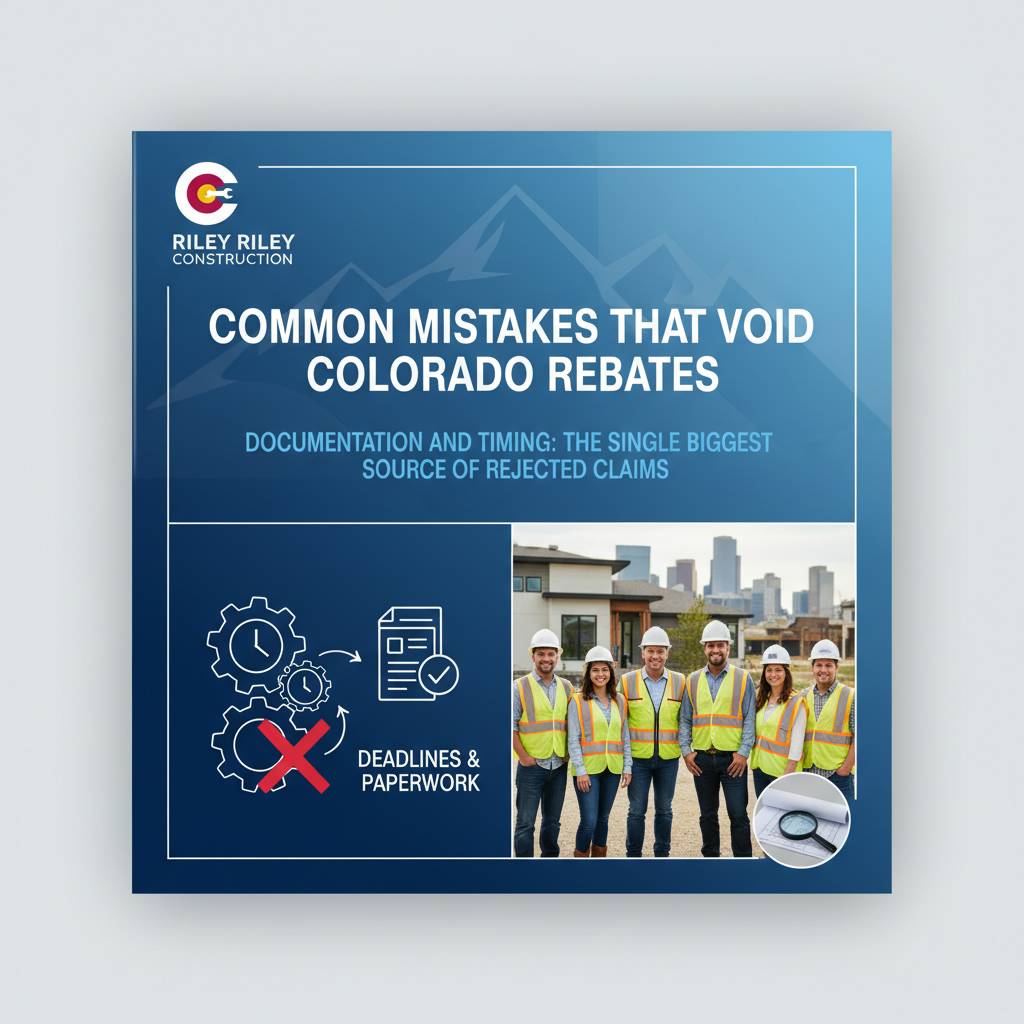 Most rebate denials are rooted in documentation errors. Programs often require a specific set of documents-itemized receipts, manufacturer specification sheets (spec sheets), installation dates, and contractor signatures-each submitted in a particular format or within defined timeframes. Missing one document or submitting a scan that lacks legible product model numbers can be enough to void your claim.
Timing errors are equally costly. Some programs require pre-approval before purchase or installation; starting work first or buying equipment without prior authorization will disqualify that project in many cases. Other programs insist the claim be filed within 90 days of purchase or installation. To protect your rebate, record purchase and installation dates immediately, and double-check any pre-installation approval requirements.
Practical steps to avoid documentation and timing errors
- Request and keep itemized receipts that include model numbers, serial numbers (when applicable), and purchase dates.
- Obtain manufacturer spec sheets for each product; scan or photograph the relevant pages showing performance metrics and model identifiers.
- Check program pages for pre-approval rules. If pre-approval is required, submit your application before buying or installing the equipment.
- Photograph installations showing serial/model labels, and keep contractor-signed completion forms if the program requires them.
Approved product specifications: matching models to program requirements
Rebate programs typically list eligible models or define technical thresholds-SEER, HSPF, AFUE, ENERGY STAR certification, or specific inverter technology for solar inverters, for example. Submission of a different model number or omission of the required certification will often lead to rejection, even if the installed unit is technically high performance.
Before purchasing, cross-reference the exact model number with the program's eligible product list. If the program expects a product to meet a particular efficiency rating, ensure the spec sheet documents that value clearly and unambiguously. Keep in mind that model numbers can change slightly across regions or production years, so validating the exact SKU in advance is essential.
Examples of specification-related disqualifications
- Purchasing a heat pump with a SEER rating below the program minimum, even if the unit is ENERGY STAR certified.
- Installing a water heater with an incorrect fuel type listed on receipts (electric vs. gas) that contradicts manufacturer documentation.
- Submitting a generic spec sheet for a product family rather than the specific installed model's spec sheet.
Installation and contractor pitfalls that lead to lost rebates
Contractor-related issues are another common source of rebate denial. Programs often require licensed or approved contractors, specific installation procedures, or third-party verifications. Hiring an unapproved contractor, or failing to obtain required post-installation certifications, can void the rebate regardless of equipment quality.
To avoid these problems, ask contractors for proof of any required licensure or program registration prior to work. Make sure all contractor-supplied documents-completion statements, signed work orders, or commissioning reports-are accurate, fully signed, and included with the rebate submission. Retain copies of all communications and confirmations for future audits.
Contractor checklist
- Confirm the contractor is listed as approved by the utility or rebate program if required.
- Request a complete installation report and commissioning checklist where applicable.
- Ensure final paperwork includes system serial numbers, model numbers, and installation dates.
- Retain emails or written quotes that specify the equipment to be installed; verbal assurances are insufficient.
Audits, appeals, and how to respond to a denied rebate
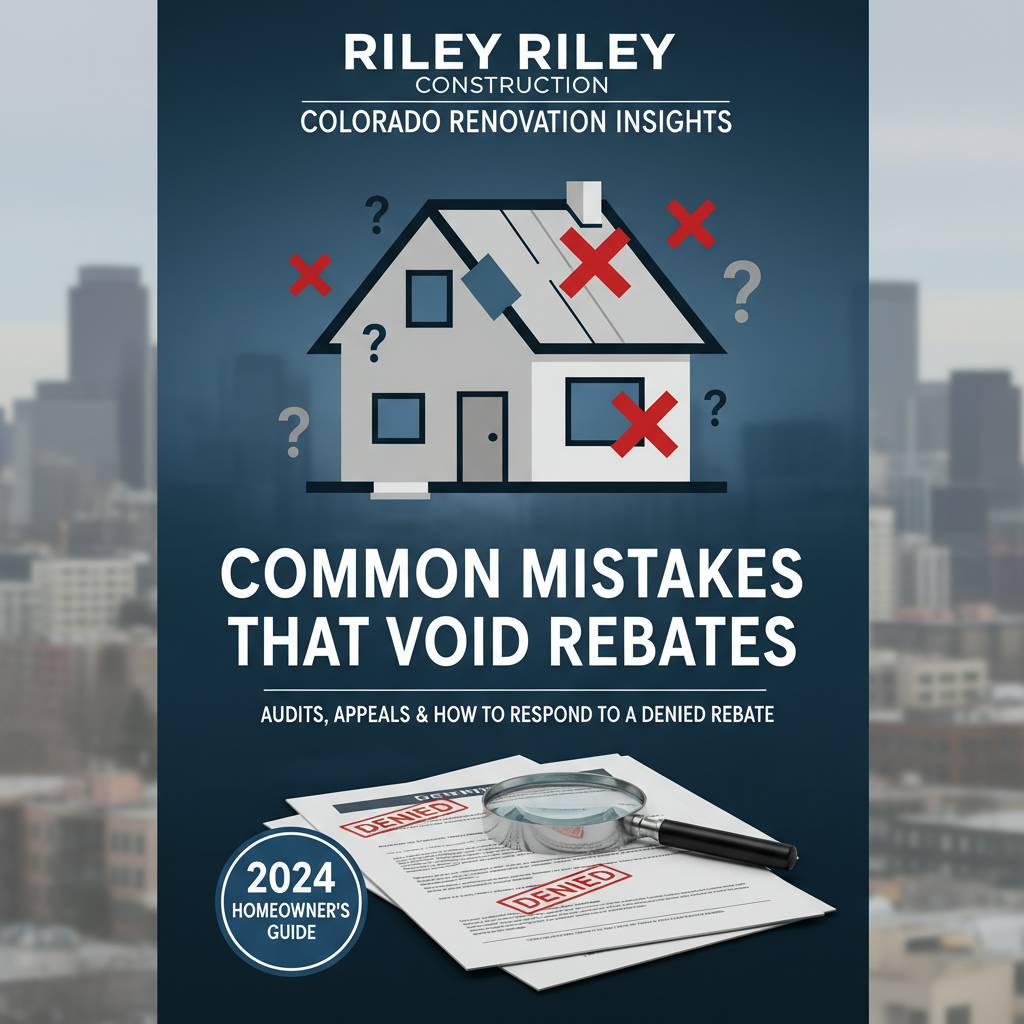 Even when you think everything was done correctly, programs perform audits and sometimes issue denials. Denials often include a reason and a limited window for appeal or for submission of supplemental evidence. Responding promptly and with organized documentation can reverse a denial in many cases.
If you receive a denial notice, first review the program's denial reason carefully, then assemble the supporting documents they request-receipts, spec sheets, installation photos, and contractor sign-offs. Submit the appeal within the stated timeframe and include a clear, concise cover letter explaining any discrepancies and attaching any corrective documentation.
Case study: recovering a denied heat pump rebate
A homeowner intended to claim a heat pump rebate and submitted the application after installation. The utility denied the claim because the spec sheet lacked the HSPF rating required by the program. By providing a manufacturer-certified spec sheet and a contractor-signed commissioning report that included the HSPF information, the homeowner successfully overturned the denial. The key was prompt, organized documentation and direct communication with the program administrator.
Practical tools: forms, checklists, and a comparison table
Below is a concise comparison showing how common mistakes arise and how to fix them. Use this table as a quick reference before you finalize purchases or installations to reduce the risk of disqualification.
| Mistake | Why it Matters | How to Fix |
|---|---|---|
| Missing model numbers on receipts | Program administrators cannot verify eligibility. | Obtain itemized receipts with full model and serial numbers from vendor or contractor. |
| Installing before pre-approval | Pre-approval confirms project meets program rules before investment. | Submit pre-approval forms and get written confirmation before ordering or installing. |
| Using non-approved contractor | Contractor approval can be a prerequisite for rebate payment. | Confirm contractor is on the program's list or register them before starting work. |
| Insufficient spec documentation | Cannot demonstrate that product meets minimum efficiency/certification. | Save manufacturer spec sheets that explicitly show required metrics and certification. |
Actionable checklist: pre-purchase and post-install steps
Before you buy: verify program eligibility, confirm pre-approval requirements, and check the eligible product list for exact model numbers. During purchase: collect itemized invoices with all product identifiers. During installation: have the installer document serial numbers and capture clear photos of installed equipment and labels. After installation: submit required forms promptly and retain copies of everything.
- Pre-purchase: Confirm program rules and pre-approval needs.
- Purchase: Get itemized receipts with model/serial numbers.
- Installation: Photograph equipment and labels; request signed completion forms.
- Submission: Include spec sheets, invoices, photos, and contractor forms; file within the deadline.
How Riley Riley Construction helps prevent errors and secure your rebates
Riley Riley Construction specializes in reviewing project plans and rebate applications to minimize the risk of common mistakes that void Colorado rebates. Our team will walk through the program rules with you, validate product selections against eligible lists, and verify that your contractor documentation meets the specific requirements of your utility or incentive program.

When you work with Riley Riley Construction, we focus on the critical areas that trigger denials: pre-approval timing, exact model verification, and complete, legible documentation. Occasionally we work with homeowners and contractors to correct submission errors or to prepare appeals after a denial, which can save you hundreds or thousands of dollars in expected incentives.
Frequently asked questions
Q: What should I do if I already purchased equipment before checking rebate rules? A: Contact the program administrator immediately and ask if there is a retroactive exception or expedited pre-approval. Many programs strictly forbid retroactive approvals, but early communication may still uncover options like alternative incentives or a partial claim path.
Q: How long should I keep my documents? A: Retain all receipts, spec sheets, and contractor paperwork for at least three to five years. Programs can audit projects long after payment, and having thorough records protects you during audits and when transferring property.
Q: Can I submit digital photos and scans? A: Yes-most programs accept digital images, but ensure they are clear, show serial and model numbers without obstruction, and are saved in commonly accepted formats like PDF or JPEG. Poor image quality is a frequent cause for request for additional information or denial.
Final steps: protect your savings now
Taking a few precautionary steps up front dramatically reduces the chance of becoming a statistic among those who lose their expected incentives. Before you sign any contracts or make purchases, run your plan through a checklist for documentation and pre-approval. Confirm product model eligibility and obtain a clear written timeline from your contractor for installation and final paperwork submission.
If you prefer an expert review, call 17209279730 to schedule a consultation. Riley Riley Construction can review receipts, spec sheets, and contractor paperwork, and advise on the fastest way to conform to program requirements so your rebate remains intact.
Quick call to action: For a project review that identifies the most likely pitfalls and preserves your rebate eligibility, contact Riley Riley Construction at 17209279730. We will help you confirm documentation timing and approved product specifications so you avoid costly disqualifying errors.
Thank you for taking the time to plan your energy upgrade carefully. Protecting your expected savings means preparing the right documents, meeting timing rules, and choosing approved equipment. For personalized assistance and to prevent common mistakes that void Colorado rebates, reach out to Riley Riley Construction at 17209279730.