Ineligible Upgrades That Waste Tax Credits Colorado
Installing ineligible upgrades can waste tax credits and increase costs. Riley Riley Construction flags common ineligible items and suggests compliant alternatives. Call 17209279730 to review planned upgrades before you buy. This protects your investment and preserves rebate eligibility.
Why planning upgrade choices matters for homeowners
Every homeowner who plans energy efficiency or renewable energy upgrades should understand that not every improvement qualifies for federal, state, or utility tax credits and rebates. Installing the wrong components, or combining eligible and ineligible items without clear documentation, can disqualify a project or reduce the amount of support you receive. Thoughtful planning prevents wasted money and protects long-term value in your home.
For properties in Colorado, the interplay of state incentives, local utility rebates, and federal tax credits creates opportunities - and pitfalls. Projects completed without a pre-purchase review are at higher risk of inadvertently including ineligible upgrades. Riley Riley Construction helps clients identify these risks early so buyers and contractors can adjust plans, preserving eligibility and avoiding costly rework.
Understanding program rules before you buy also speeds processing and reduces the chance of audit issues. Simple steps - documenting pre-upgrade conditions, requesting pre-approval when available, and choosing certified equipment - help claims proceed smoothly. When you plan intentionally, you retain both the practical performance benefits and the financial value of incentives.
Common ineligible upgrades that waste tax credits
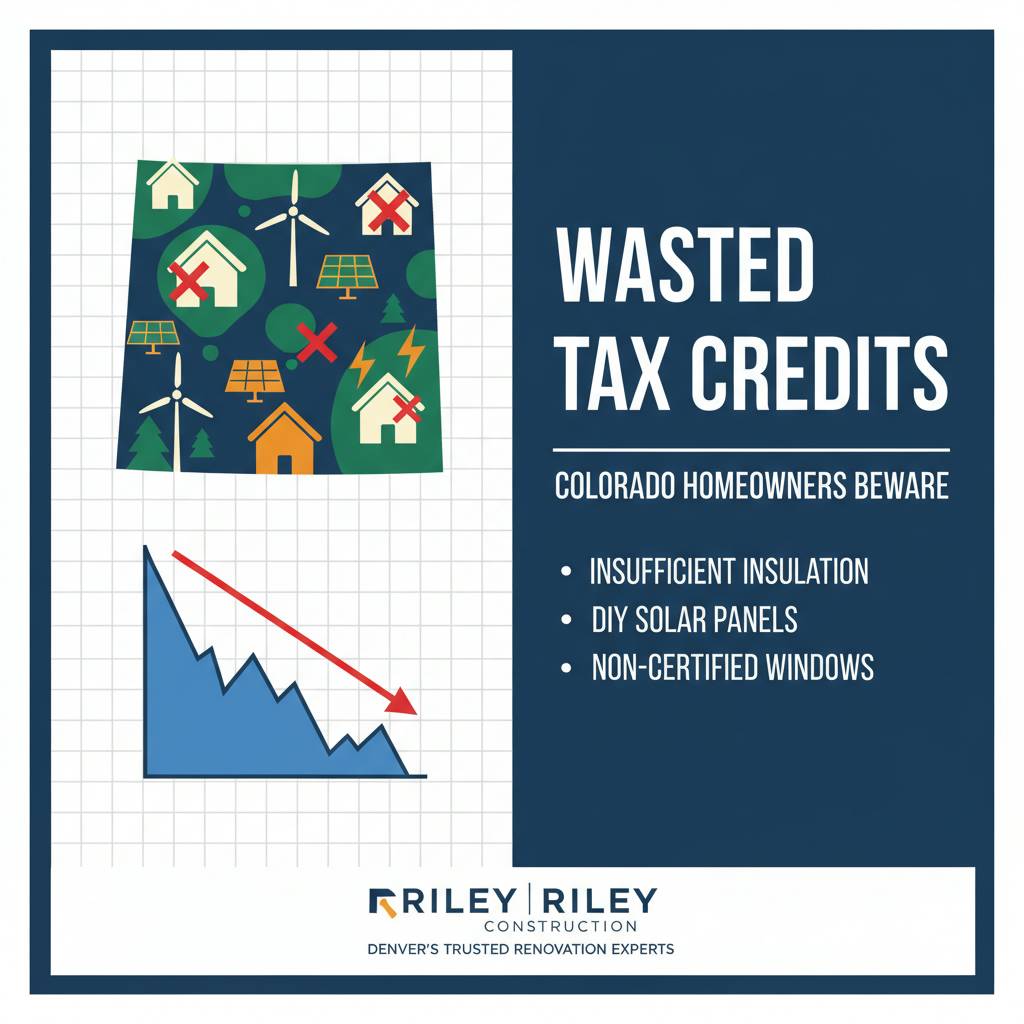 Many homeowners assume that all energy-related improvements are covered, but programs often exclude certain upgrades or workmanship components. Typical ineligible items include aesthetic retrofits unrelated to energy performance, non-certified or uncertified-brand equipment, and add-ons like decorative lighting or unlisted thermostats. These choices can render an otherwise qualifying project partially or entirely ineligible for incentives.
Other frequent offenders are bundled upgrades where the primary qualifying equipment is mixed with ineligible accessories. For example, adding a premium audio system alongside a heat pump installation can complicate declarations and documentation. Similarly, installing oversized or non-listed renewable components that don't meet program specifications creates compliance problems and can lead to recapture of previously issued credits.
Contractor-installed labor that isn't separately itemized may also cause issues. Some programs require a clear separation of materials and labor, or documentation showing that certain labor types are eligible. When workmanship or equipment fails to match the program's list of approved measures, you risk losing incentive dollars and paying twice for fixes or replacements.
How tax credits and rebates work - and where claims go wrong
Tax credits reduce your tax liability, while rebates generally provide direct payments or bill credits. Both rely on precise eligibility rules such as equipment certification (ENERGY STAR, ARI, etc.), installation standards, and documentation requirements. Missing a single document or installing a non-certified model can invalidate a claim and trigger the need for corrections that can be costly and time-consuming.
Programs also set performance thresholds. For instance, a heat pump must meet specific Seasonal Energy Efficiency Ratio (SEER) or Heating Seasonal Performance Factor (HSPF) values to qualify. If a homeowner buys a lower-tier model to save upfront costs, the unit may fall below the minimum and disqualify the entire incentive. That is why verification before purchase is critical.
Another common mistake is timing: incentives sometimes require pre-approval or documentation of the condition before work begins. Beginning construction or purchasing equipment prior to receiving authorization can forfeit eligibility. Documented pre-work photos, contractor bids with line-item breakdowns, and signed pre-approval letters significantly reduce these risks.
Compliant alternatives and best practices
Choosing compliant alternatives doesn't mean sacrificing quality or comfort. In many cases, selecting a certified equivalent or an approved accessory costs little more but preserves incentives. Certified smart thermostats, properly rated insulation systems, and listed heat pump models provide both regulatory compliance and long-term energy savings. clients often find that minor specification changes avoid major eligibility problems.
A few best practices include requesting product model numbers for pre-approval, verifying contractor credentials, and ensuring all equipment bears required efficiency labels. Also consider modular approaches: implement the highest-priority qualifying measures first, document them thoroughly, and phase in optional upgrades later to avoid mixing eligible and ineligible items in a single claim.
Working with a specialist who understands ineligible upgrades that waste tax credits Colorado helps you identify where common mistakes occur in our state's programs. Riley Riley Construction recommends keeping clear, dated photos of the installation area, obtaining an itemized invoice, and retaining certification documents from manufacturers to make claims cleaner and more defensible.
Cost considerations and practical examples
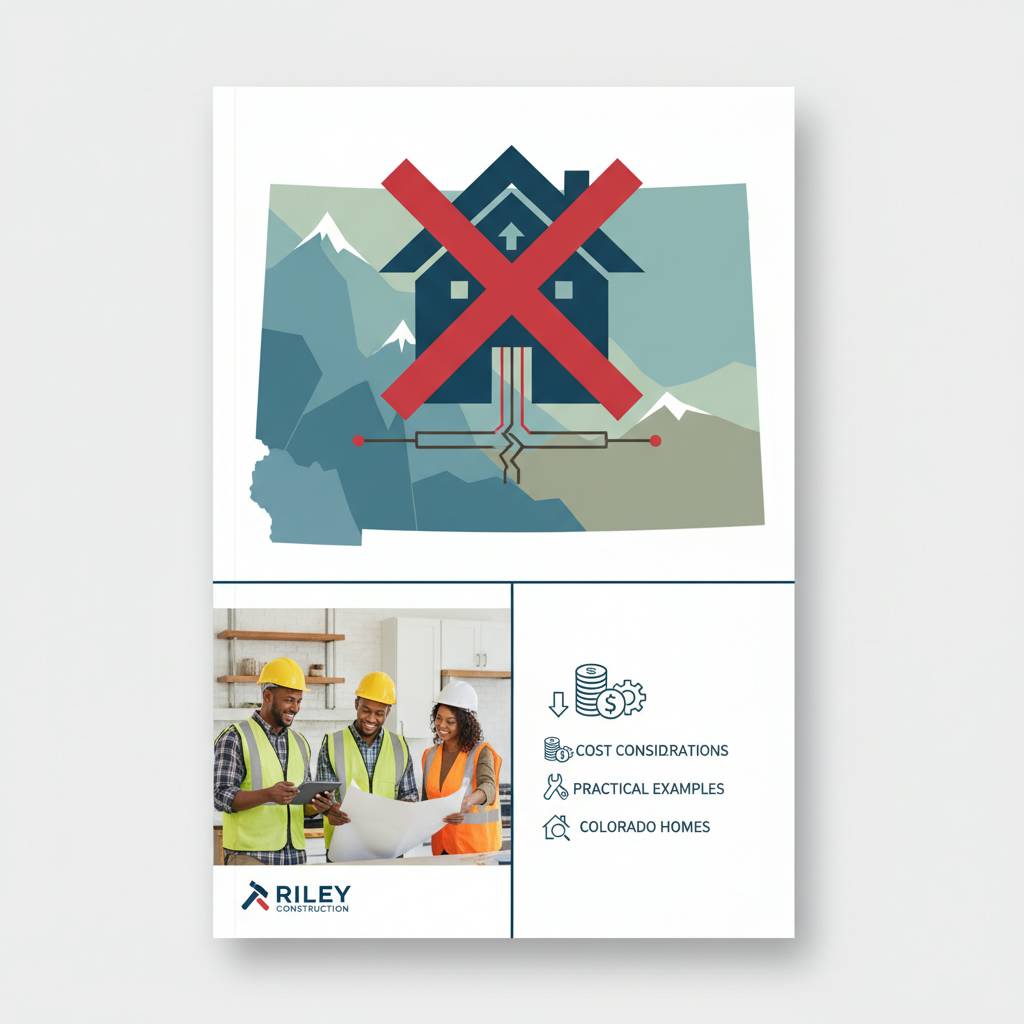 Costs for compliant alternatives vary widely depending on home size and regional labor rates. Basic upgrades like smart thermostats or low-E windows typically fall in the $75-$200 and $250-$1,200 ranges respectively, while larger systems such as heat pumps and solar arrays can range from $4,000-$25,000 or more. Choosing certified models may add modest premium but is usually offset by rebates and tax credits.
Here are a few representative examples that show how small decisions change outcomes: a homeowner who swapped an uncertified mini-split for a certified model preserved a $1,500 rebate; a renovation that excluded decorative LED strips from the scope maintained eligibility for the comprehensive insulation rebate; and a solar array specified with compliant inverters captured a larger state tax credit.
| Upgrade Type | Typical Cost Range | Notes on Eligibility |
|---|---|---|
| Smart Thermostat | $75-$200 | Must be an approved model and installed with qualifying HVAC to receive some rebates |
| Insulation | $500-$5,000 | R-value must meet program guidelines; documentation required |
| Heat Pump | $4,000-$12,000 | Model certification and performance thresholds are strictly enforced |
| Solar PV | $10,000-$30,000 | Inverter and module certifications, interconnection approvals needed |
These examples illustrate how the right specifications and documentation maximize incentive capture. Even when an approved component costs a bit more upfront, the combined value of credits, rebates, and long-term savings typically delivers stronger financial outcomes than cheaper, ineligible options.
Step-by-step review process: How to avoid ineligible purchases
Follow a structured review process before committing to any purchase. Start by listing desired upgrades and checking official program documentation for eligible measures. Contacting the incentive administrator or a qualified advisor to pre-validate equipment and contractor choices often prevents disqualification. This preliminary step is simple yet decisive for preserving benefits.
Next, request a detailed, itemized estimate from your contractor. Ensure model numbers and certifications are clearly listed and that labor and materials are separated where required. Ask for a project timeline and an explanation of what will be submitted for rebates and tax credits. Clear, written communication protects all parties and provides a defensible record for future audits.
Finally, secure any necessary pre-approvals, document pre-existing conditions with dated photos, and retain all receipts and compliance certificates. If a program requires inspection, schedule it before final payment whenever possible. Riley Riley Construction offers a review service to vet your planned upgrades and paperwork so you don't accidentally include ineligible items that could jeopardize your rewards.
Real-world scenarios and lessons learned
Case studies from Colorado homeowners highlight recurring patterns. One family replaced old windows and added decorative shutters in the same renovation. The shutters were considered ineligible cosmetic work and led to paperwork confusion that delayed a window rebate. Another customer purchased a non-listed inverter with their solar system; the array would have qualified for a larger credit if the inverter were on the approved list.
Lessons from these scenarios are consistent: separate cosmetic or non-performing upgrades from qualifying work, verify every model and part against program lists, and never assume that similar-sounding products are equivalent. Documentation and proactive verification are the easiest, most cost-effective ways to avoid losing significant incentive dollars.
When in doubt, pause procurement and request a review. A short consultation with Riley Riley Construction or another qualified advisor can reveal simple fixes - such as substituting an approved model or staging work differently - that preserve thousands of dollars in benefits and prevent expensive corrections after the fact.
Frequently asked questions
What happens if I already installed an ineligible item?
If you've already installed an ineligible upgrade, the first step is to stop any additional related purchases and gather documentation. Contact the program administrator or your advisor to determine whether partial reimbursement is possible or whether corrective action can be taken. Sometimes replacing the ineligible component with an approved one or resubmitting documentation can restore eligibility.
Can my contractor handle eligibility checks?
Many contractors are familiar with local programs, but their knowledge varies. Always verify that the contractor has experience with the specific incentives you plan to claim. Request references or proof of past projects awarded rebates or tax credits. Riley Riley Construction can also independently review contractor proposals to ensure compliance.
Are small accessories ever a problem?
Yes. Even small accessories can create documentation complications, or be explicitly excluded. Examples include decorative lighting, non-certified fans, or premium audio wiring added to an HVAC upgrade project. When accessories are bundled into a single invoice, separating eligible from ineligible costs becomes difficult, risking denial.
Next steps and how Riley Riley Construction can help
If you have planned upgrades, start by compiling a short list of proposed equipment and any contractor quotes you've received. Contact Riley Riley Construction for a pre-purchase review - this simple step can identify ineligible upgrades that waste tax credits Colorado before you spend a dollar. Our review highlights substitutions, documentation needs, and whether pre-approval is required.
We offer a practical, itemized checklist and a review service to flag issues, recommend compliant alternatives, and prepare documentation that aligns with program rules. Whether you are updating a furnace, installing a heat pump, or installing solar, a brief consultation today can protect incentives and avoid costly mistakes later. Call us at 17209279730 for a rapid evaluation.
Quick call to action: Don't risk losing incentives or paying twice for repairs. Have your upgrade plans reviewed before you purchase equipment or sign contracts.
Contact Riley Riley Construction at 17209279730 to schedule a pre-purchase review and safeguard your rebates and tax credits. We will help you choose compliant equipment, document the project correctly, and preserve your financial benefits.