How To Claim Colorado Energy Rebates
Claiming Colorado energy rebates can be confusing without a clear process. Riley Riley Construction guides homeowners step by step through applications and documentation. Call 17209279730 to begin the claims process with expert support. Our goal is to accelerate approvals and secure every eligible rebate.
Understanding how to claim Colorado energy rebates often starts with a single question: where do I begin? Many homeowners hear about incentives for heat pumps, solar, insulation, or efficient appliances but stop when the paperwork, deadlines, and eligibility rules feel overwhelming. Riley Riley Construction helps sort those details into a straightforward plan and supports you through each step, reducing delays and maximizing the amount you receive.
Whether you are replacing an HVAC system, upgrading windows, or installing rooftop solar, the application process typically requires coordination between contractors, utilities, and government portals. Working with an experienced partner can shorten cycles and prevent common missteps that delay payments. Call 17209279730 if you want a practical, guided approach to capturing every rebate for which your home qualifies.
Why Colorado energy rebates matter for homeowners
Energy rebates in Colorado are more than discounts; they are an investment in lower bills, improved comfort, and long-term home value. Rebates reduce upfront costs for efficiency upgrades that otherwise might be financially out of reach. They also speed payback on projects like high-efficiency furnaces, heat pumps, smart thermostats, and whole-home weatherization improvements, often making the difference between starting a project now versus waiting years.
Beyond direct savings, many incentives support emission reductions statewide and encourage local contractors to offer energy-conscious solutions. For homeowners, that means better project pricing and availability. Moreover, documented efficiency improvements can increase resale value and qualify properties for favorable financing programs-benefits that extend well past the initial rebate deposit.
Common rebate programs and typical eligibility
 Colorado offers a mixture of statewide, utility-specific, and local incentives. Utilities like Xcel Energy and Black Hills Energy have dedicated rebate programs for appliances, heating and cooling, and electrification. The state and municipalities sometimes provide complementary grants or point-of-sale discounts. Eligibility can depend on project type, home location, whether work is performed by a licensed contractor, and proof of installation and product specifications.
Examples of program types
- Utility rebates for equipment upgrades (e.g., heat pumps, EV chargers, efficient water heaters).
- State grants or lump-sum incentives tied to weatherization or electrification projects.
- Local or municipal programs that focus on low-income households or community-specific goals.
- Manufacturer or dealer discounts that stack with utility rebates when properly documented.
| Project | Typical rebate range | Notes |
|---|---|---|
| Heat pump installation | $500-$2,500 | Varies by efficiency rating, home size, and utility. |
| Smart thermostats | $75-$200 | Often instant rebates through utility portals or retailer programs. |
| Insulation & air sealing | $200-$1,500 | May require pre- and post-installation documentation for higher tiers. |
These amounts are illustrative. Actual incentives change seasonally and with budget cycles, so it is important to confirm current values before you sign contracts or order equipment. Riley Riley Construction monitors program updates to ensure applications reflect current rebate rules and eligible products.
Step-by-step: how to claim Colorado energy rebates
Step 1: Identify eligible programs. Start by listing the improvements you plan and the relevant programs by utility and municipality. Many homeowners miss available incentives because they only check a single source. A thorough search includes utility web portals, state program pages, and local government offerings. Keep a simple spreadsheet to track program names, deadlines, and required documents.
Step 2: Pre-approval and contractor coordination. Some rebates require pre-approval or that the work be performed by a participating contractor. Confirm contractor credentials, product specifications, and whether a pre-approval form or home inspection is necessary. If a program mandates pre-inspection, schedule it before purchasing materials to avoid ineligibility.
Step 3: Complete the installation and gather documentation. After the work is done, collect invoices, proof of payment, product model numbers, and contractor sign-offs. For efficiency upgrades, photos of installed equipment and serial numbers are often required. File these documents immediately-many programs have short claim windows following installation.
Step 4: Submit the application or upload documents. Use the specific utility or program portal to upload forms and receipts. Where portals are unavailable, programs may accept email or mailed packets. Ensure forms are fully completed, signatures are present, and attachments meet size and format requirements. Missing fields are the most common cause of denial or delay.
Step 5: Track the claim and respond to requests. After submission, note confirmation IDs and expected timelines. Programs sometimes request follow-up inspections or additional documentation. Respond promptly to information requests-delays in communication increase the risk of missed payment windows or canceled claims. If a payment is delayed, escalate through program contacts or request an appeal with supporting records.
Documentation checklist and application tips
Gathering accurate documentation before you start makes the process far smoother. A typical checklist includes: proof of residence and utility account number, contractor invoice with line-item details, product model and serial numbers, photos of the installation, completed rebate application forms, and proof of payment. Keep both digital and physical copies organized by project to streamline future claims or audits.
- Verify product eligibility: confirm model numbers against program-approved lists before purchase.
- Obtain contractor certification: some incentives require participation in utility trade ally networks.
- Note timelines: many utilities require submission within 60-120 days of installation.
- Cross-check rebate stacking rules: understand whether multiple incentives can be combined.
Small details matter. For example, a contractor invoice that lacks the product model number or installation date can trigger a request for supplemental proof, delaying payment. Photographing paperwork, equipment labels, and the meter before and after installation creates an audit trail that reduces friction. Riley Riley Construction recommends a folder system and can provide templates for consistent record-keeping.
Timeline expectations, tracking, and handling denials
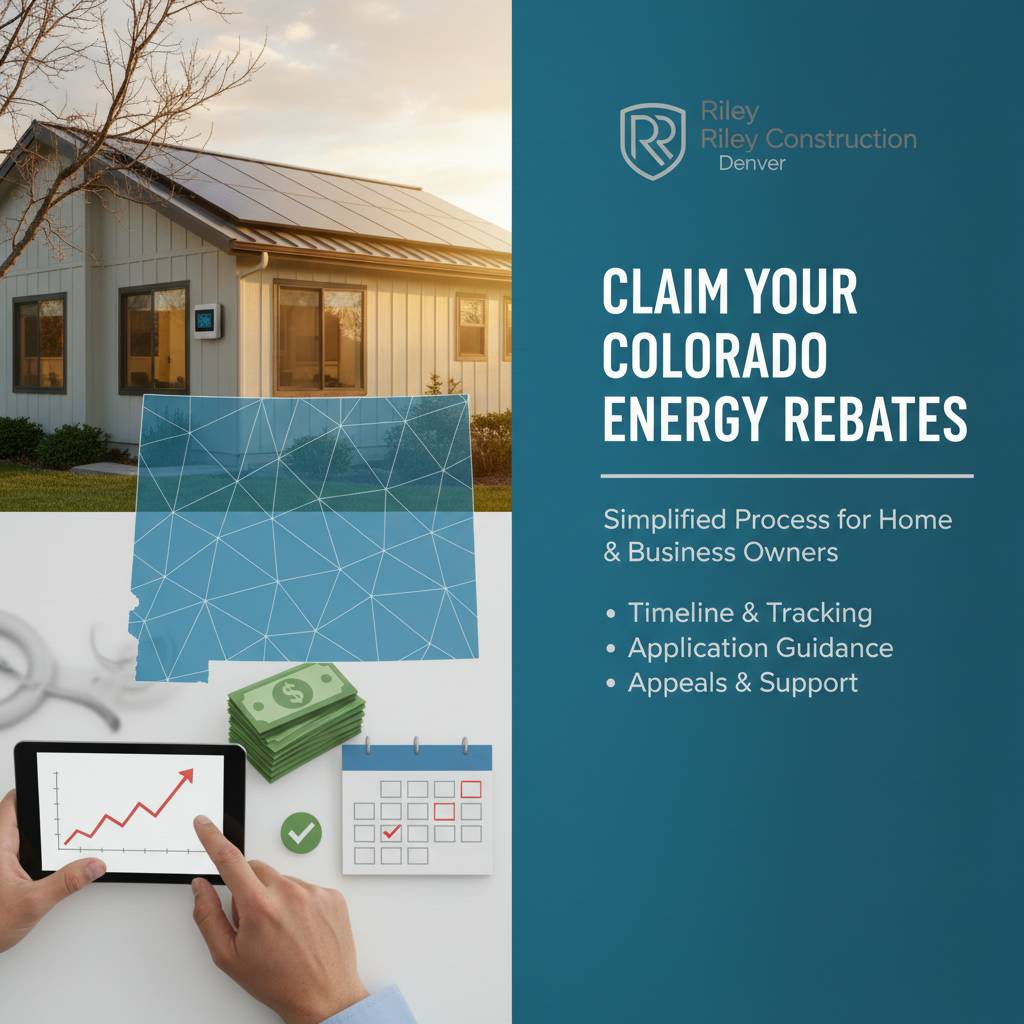 Processing times vary widely by program. Some instant rebates appear at point-of-sale or within a few business days, while larger project reimbursements can take 6-12 weeks or longer. Factors that extend timelines include program backlog, verification inspections, and missing paperwork. Set a realistic expectation of 1-3 months for routine claims and longer for complex or high-value grants.
If your claim is denied, carefully review the denial notice to identify the specific reason. Common causes include ineligible equipment, missing signatures, or submission outside the allowed window. You typically have the right to appeal or to submit supplemental documentation. Keep all communication records and timestamps; clear, polite follow-up often resolves issues faster than repeated resubmissions without additional information.
Tracking tools can help. Use a spreadsheet or a project tracker to record application dates, confirmation numbers, scheduled inspections, and follow-up activities. If you prefer not to manage this yourself, Riley Riley Construction offers claim-tracking support that coordinates with contractors and program administrators to keep the process moving.
Real homeowner example: a practical case study
A Denver homeowner replaced an aging gas furnace with an electrically driven heat pump and upgraded attic insulation. Initially unsure about which incentives applied, they contacted Riley Riley Construction for help. We identified two overlapping utility rebates and a state-level efficiency grant. Because we confirmed product eligibility up front and coordinated the contractor for a pre-approval inspection, the homeowner avoided common documentation gaps and received combined rebates totaling several thousand dollars.
The homeowner's timeline: pre-approval and contractor selection took two weeks, installation and documentation collection took one week, and rebate processing completed in nine weeks. This example shows how planning and coordination shorten the path from project start to reimbursement, reduce out-of-pocket risk, and ensure the homeowner receives the full benefit available.
Questions homeowners ask most often
Can I apply for rebates after the work is completed?
Some programs allow post-installation claims but impose strict submission windows-often 60-120 days from the installation date. Other programs require pre-approval or a pre-inspection, so late applications will be denied. Always verify program rules before purchasing equipment or scheduling work; if in doubt, reach out to Riley Riley Construction for guidance.
Do I need a licensed contractor?
Many incentives require that work be performed by a licensed or participating contractor. This helps ensure safety and compliance with program standards. If you plan to self-install, confirm eligibility rules first; certain DIY projects may not qualify for rebates. occasionally helps homeowners find vetted contractors who participate in local rebate programs.
Next steps and how Riley Riley Construction can help
If you're ready to start, take a few simple steps: list the upgrades you want, gather your utility account information, and take photos of the existing equipment. Contact Riley Riley Construction to schedule a free review of likely incentives and a stepwise plan to capture them. We'll help you prioritize projects based on net cost after rebates and expected long-term savings, reducing guesswork and financial risk.

Call 17209279730 to set up a consultation today. Our team will explain available programs, confirm eligibility, and outline the documentation you need. We focus on clear timelines and proactive follow-up so your claim moves quickly from submission to payment. Let us handle the paperwork while you focus on the project itself.
Ready to accelerate your rebate approvals and secure every eligible dollar? Contact Riley Riley Construction at 17209279730 for expert support throughout your energy upgrade. We look forward to helping you navigate how to claim Colorado energy rebates and maximize your savings.